

Why Chandelier Size Matters in Luxury Interior Design
Choosing the correct chandelier size is one of the most important decisions in luxury interior lighting design. A chandelier that is too small can disappear within a large room, while an oversized fixture can overwhelm the space. In grand residences and high-ceiling interiors, chandelier scale must complement the architecture, furniture layout, and proportions of the room.
In spaces such as double-height foyers, staircases, dining rooms, and expansive living areas, chandeliers often act as architectural focal points. Designers therefore consider room dimensions, ceiling height, chandelier drop length, and material presence when selecting the right fixture.
At HDLS Lighting Ltd, our designers collaborate with architects and interior designers to plan luxury chandeliers and bespoke grand-scale lighting installations for luxury residences and prestigious interiors. This guide explains how professional designers determine the ideal chandelier size for different rooms, ceiling heights, and architectural spaces.
Table of Contents
- Why Chandelier Size Matters in Luxury Interior Design
- Why Standard Chandelier Size Rules Often Fail in Luxury Homes
- The Chandelier Size Formula Designers Use
- Chandelier Size Examples by Room Scale
- How to Choose the Right Chandelier Size for Each Room
- Sizing Chandeliers for High Ceilings and Double-Height Spaces
- Chandelier Drop Length: How High Should a Chandelier Hang?
- The Role of Materials in Perceived Chandelier Size and Visual Presence
- When to Choose a Bespoke Chandelier
- Final Thoughts: Choosing the Right Chandelier Size
 Aurelio Wave — a custom-made large-scale linear crystal chandelier. When properly sized, a chandelier creates visual balance between the dining table, ceiling height, and the architectural proportions of the interior.
Aurelio Wave Crystal Linear Chandelier
L: 280 cm (110") × W: 67 cm (26") × H: 35 cm (14") — Customisable
Crafted from 18K gold-plated copper and precision-cut Asfour Egyptian crystal.
Designed for:
Estate-scale homes
Luxury open-plan interiors
Large-format dining compositions
Architectural kitchen islands
Lead Time: 8–10 Weeks
Why Standard Chandelier Size Rules Often Fail in Luxury Homes
Most chandelier sizing guides use a simple formula based on room length and width. While this works in homes with standard ceiling heights, it often fails in luxury interiors where rooms are significantly larger and ceilings much higher.
In grand residences, penthouses, and estate homes, ceilings frequently exceed 12–20 feet, and spaces such as double-height foyers, sweeping staircases, and expansive living rooms create far greater room volume than standard sizing formulas anticipate. As a result, a chandelier that technically fits the formula may still appear undersized.
Luxury interior designers therefore evaluate more than basic room dimensions. Ceiling height, spatial volume, architectural proportions, and sightlines all influence the correct chandelier scale.
The Chandelier Size Formula Designers Use
Most chandelier sizing guides begin with a simple rule used by interior designers to estimate the correct chandelier diameter for a room. This formula provides a practical starting point when planning lighting for dining rooms, living rooms, bedrooms, and entryways.
The guideline works as follows:
Room Length + Room Width (in feet) = Ideal Chandelier Diameter (in inches)
For example, if a room measures 16 feet by 14 feet, the calculation would be:
16 + 14 = 30
This means the recommended chandelier diameter would be approximately 30 inches.
This formula is widely used because it helps maintain proportional balance between the chandelier and the overall room dimensions. In many standard homes with typical ceiling heights, this rule often produces visually pleasing results.
However, luxury interiors introduce additional design considerations that can make the formula less reliable. In grand residences, penthouses, and estate homes, ceilings are often significantly higher and rooms far larger than the environments this rule was originally designed for. As a result, a chandelier that technically fits the formula may appear undersized once installed in a large architectural space.
For this reason, professional designers treat the formula as a starting guideline rather than a strict rule. When selecting chandeliers for luxury interiors, they often adjust size based on factors such as ceiling height, spatial volume, furniture placement, and the visual weight of materials like crystal, alabaster, or Murano-style glass.
By combining the formula with architectural judgment, designers ensure that the chandelier complements both the scale of the room and the character of the interior architecture.
Chandelier Size Examples by Room Scale
To help visualise the correct chandelier proportions, below are examples of chandeliers selected by HDLS designers based on room scale, ceiling height, and spatial composition.
Small Rooms (10–12 ft / 3–3.6 m)
Recommended Diameter: 20”–30” (50–75 cm)

Diameter: 47–61 cm (18.5”–24”)
Murano-style glass. Floral composition.
View Details →

Diameter: 57 cm (22.5”)
Gold finish. Precision-cut crystal.
View Details →

Diameter: 71 cm (28”)
Spanish alabaster. Solid copper frame.
View Details →
Medium Rooms (12–16 ft / 3.6–4.8 m)
Recommended Diameter: 30”–40” (75–100 cm)
Ideal for dining rooms, living rooms, and open-plan spaces where the chandelier becomes a central design feature.

Diameter: 85 cm (33.4”)
Murano-style glass. Solid brass structure.
View Details →

Diameter: 90 cm (35.4”)
Crystal. 18K gold-plated copper.
View Details →

Diameter: 85 cm (33.4”)
Murano-style glass. Solid copper frame.
View Details →
Large Rooms (16–20 ft+ / 4.8–6 m+)
Recommended Diameter: 40”–60” (100–150 cm)
Ideal for grand living rooms, formal dining spaces, and open architectural interiors where the chandelier defines scale, presence, and visual impact.
MOST SELECTED FOR HIGH-END PROJECTS

Diameter: 125 cm (49.2”)
Spanish alabaster spheres. Solid copper frame.
View Details →
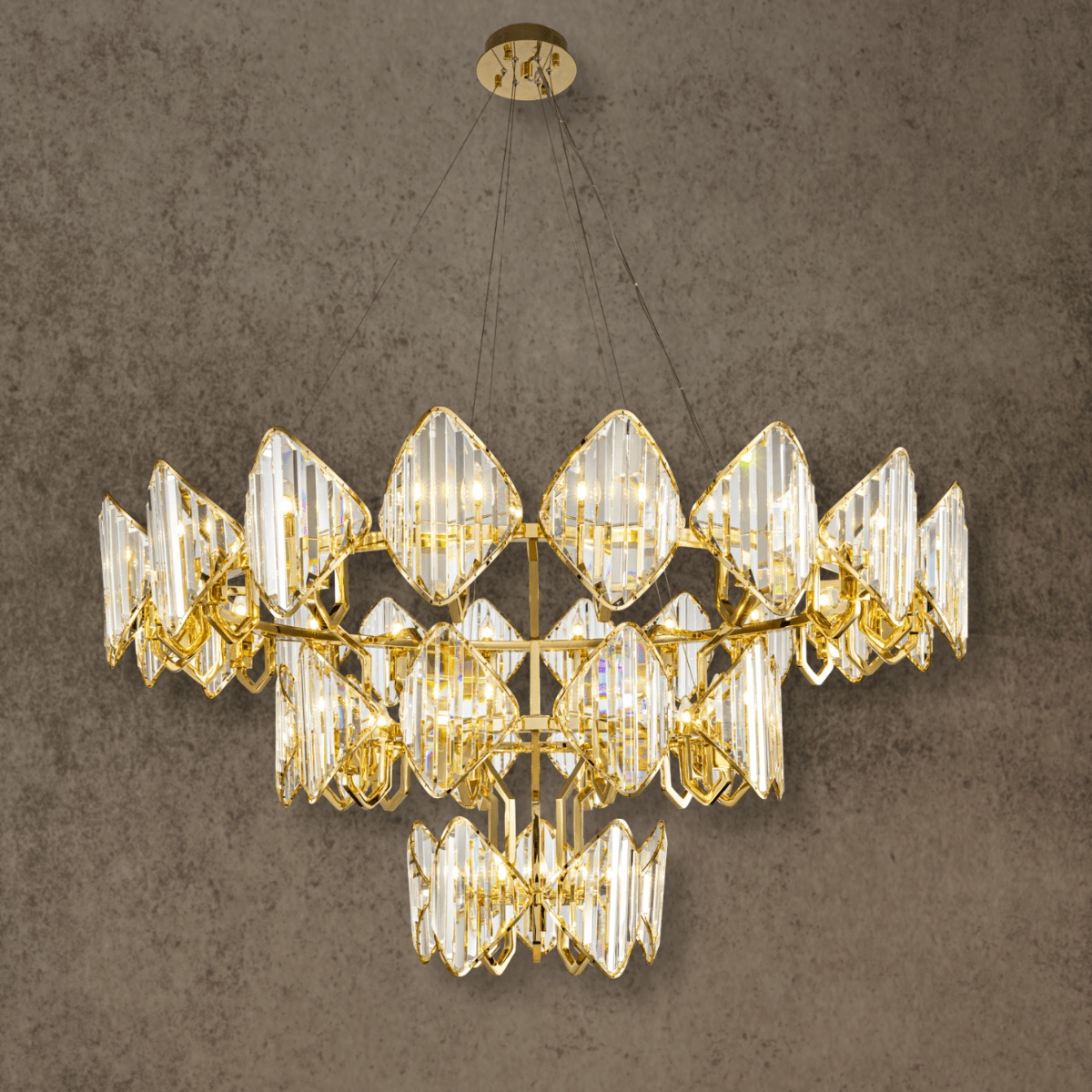
Diameter: 120 cm (47.2”)
18K gold plated copper. A+ grade crystal.
View Details →
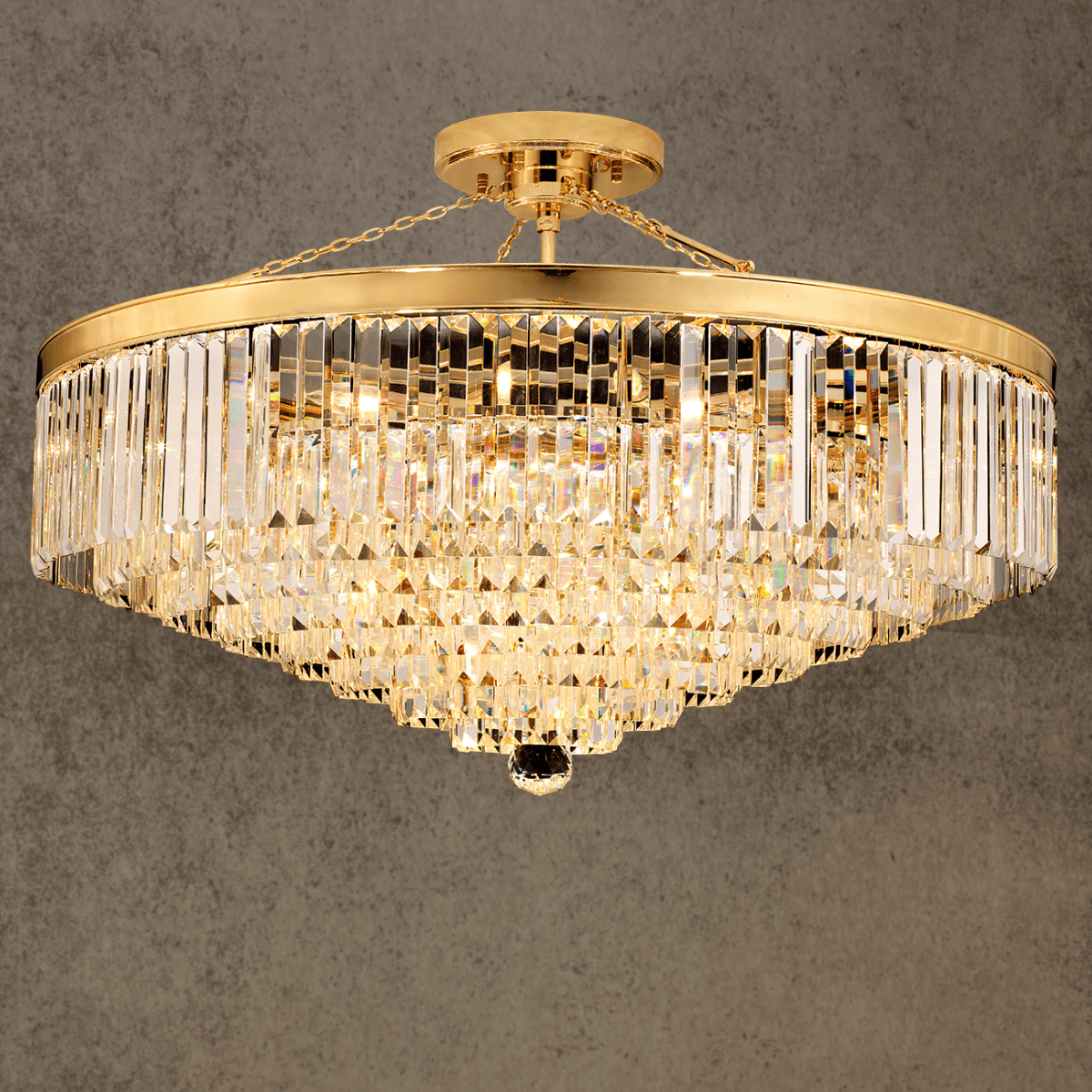
Diameter: 107 cm (42”)
18K gold plated copper. Precision-cut crystal.
View Details →
Double Height & Staircase Chandeliers
Sizing Approach
Each chandelier is proportioned individually based on ceiling height, void space, and interior layout to ensure perfect visual balance.
For double-height interiors, vertical drop and spatial composition define the design — not fixed diameter guidelines.

Height: 280 cm (110”) & 180 cm (71”)
Diameter: 38 cm (15”) · Customisable
Spanish alabaster. Solid copper structure.
View Details →

Height: 230 cm (90”)
Diameter: 150 cm (59”)
18K gold plated copper. A+ grade lead-free crystal.
View Details →
Handcrafted to Order → 8–10 Week Lead Time → Fully Customisable → Worldwide Delivery
Design consultation, sizing guidance, and quotations provided within 24–48 hours.
 Alabaster Colonna — designed for double-height staircases, proportioned to create impact, elegance, and perfect visual balance.
How to Choose the Right Chandelier Size for Each Room
Selecting the correct chandelier size depends on the function and proportions of the room. Different spaces require different chandelier diameters, hanging heights, and visual focal points. Understanding how chandelier scale works in each environment helps create balanced lighting design throughout a luxury home.
Dining Rooms and Kitchen Island Chandeliers
In dining rooms, chandeliers are typically centered above the dining table, providing a clear reference point for determining the correct size. Designers often use the table dimensions to guide chandelier diameter and ensure the lighting fixture remains visually balanced within the room.
A common rule is that the chandelier diameter should measure between one-half and two-thirds the width of the dining table. For example, if a dining table is 48 inches wide, the chandelier diameter should typically fall between 24 and 32 inches.
Height placement is equally important. Designers generally recommend hanging a dining room chandelier 30–36 inches above the table surface, providing comfortable illumination while maintaining clear sight lines across the table.
Similar principles apply to kitchen island lighting, where the scale and spacing of pendant lights must complement the length and proportions of the island.
For a detailed guide on selecting the right fixtures, spacing, and hanging height, read
Kitchen Island Lighting Ideas: How to Choose the Right Lights, Height, and Spacing.
In luxury interiors with tall ceilings, multi-tier crystal chandeliers or elongated pendant lights can create dramatic visual impact while maintaining balanced proportions within dining areas and kitchen spaces.
 Modernus Moon pendants above a marble kitchen island illustrate how the scale and spacing of lighting fixtures should complement the proportions of the island and surrounding interior.
Foyer and Entryway Chandelier Size
Foyers and entryways often create the first impression of a home, making chandelier scale particularly important. In grand entrance halls, chandeliers should emphasize vertical height while remaining proportionate to the surrounding architecture.
For standard ceiling heights, designers typically choose chandelier diameters based on the entryway dimensions. However, in two-story foyers or double-height entryways, larger multi-tier chandeliers are often used to fill vertical space and highlight the architecture.
This architectural feature is especially common in large American homes, where dramatic entrance halls and open staircases frequently include double-height ceilings designed to showcase statement lighting. For inspiration and examples of these interiors, see our guide Best Luxury Chandeliers for High-Ceiling Homes in the USA (2026 Guide).
The bottom of the chandelier should remain at least 7 feet above the floor in walkable areas, while still appearing visually centered within the height of the foyer.
 Plaza Crown Column Crystal Chandelier — a vertical architectural chandelier crafted in polished stainless steel and A+ lead-free crystal, designed to emphasize height and elegance in double-height foyer and staircase interiors.
Living Room and Great Room Chandeliers
Large living rooms and open-plan great rooms often require chandeliers that complement wide seating layouts and expansive ceiling heights. In these spaces, chandeliers frequently act as statement lighting pieces that anchor the entire room.
For luxury interiors with higher ceilings, designers often select larger sculptural chandeliers or cascading designs to maintain visual balance within the room volume.
Chandeliers in living areas are often combined with layered lighting, such as wall sconces, recessed lights, or accent lighting, to create a comfortable and balanced lighting environment.
 Montclair Crystal Chandelier — a statement crystal chandelier designed to anchor large living rooms and open-plan great rooms with high ceilings.
Sizing Chandeliers for High Ceilings and Double-Height Spaces
High ceilings require a different approach to chandelier sizing. In rooms with ceilings above 12 feet, the chandelier must emphasize vertical scale while remaining visually balanced within the surrounding architecture.
In double-height interiors such as staircases, atriums, and grand foyers, designers often select elongated or cascading chandeliers that extend downward through the vertical space. These fixtures help visually connect upper floors with the ground level while highlighting the architectural height of the room.
A commonly used guideline is to increase chandelier height in proportion to the ceiling height. Designers often allow approximately 2.5–3 inches of chandelier height for every foot of ceiling height. This ensures the fixture fills the vertical volume of the room without appearing undersized.
Luxury homes frequently feature staircase chandeliers composed of multiple crystal or glass elements arranged in vertical cascades. These installations work particularly well in spiral staircases, curved staircases, and open stairwells where the chandelier can follow the movement of the architecture.
In these environments, chandeliers are often treated as architectural statement pieces rather than simple light fixtures. When properly scaled, a staircase chandelier can transform a double-height interior into the visual centerpiece of the home.
Chandelier Height Guide for High Ceilings
| Ceiling Height | Suggested Chandelier Height |
|---|---|
| 10–12 ft | 24–30 inches |
| 14–16 ft | 30–40 inches |
| 18–20 ft | 40–60 inches |
| 20+ ft | Custom chandelier |
 La Scala Crystal Sovrano — engineered for double-height foyers, delivering architectural scale, luminous crystal presence, and refined grandeur.
Chandelier Drop Length: How High Should a Chandelier Hang?
Choosing the correct chandelier drop length is just as important as selecting the right diameter. Drop length refers to the distance between the ceiling and the bottom of the chandelier, and it must provide proper illumination while maintaining clear sightlines and safe clearance.
In dining rooms, designers typically hang chandeliers 30–36 inches above the table surface, creating balanced light while allowing comfortable visibility across the table.
In foyers and entryways, the bottom of the chandelier should remain at least 7 feet above the floor in walkable areas. In double-height entrances, fixtures are often positioned so they appear visually centered between floors.
Staircase chandeliers require additional consideration. Cascading or multi-tier designs are often used to follow the vertical movement of the stairwell while maintaining safe clearance above the steps.
Many HDLS chandeliers feature adjustable chain or rod suspension, allowing designers to tailor the drop length to the ceiling height and architectural proportions of the space.
The Role of Materials in Perceived Chandelier Size and Visual Presence
When selecting a luxury chandelier, scale is determined not only by measurements but also by the materials used in its construction. Different materials interact with light and space in distinct ways, influencing how large or visually prominent a chandelier appears within an interior.
For example, crystal chandeliers and Murano-style glass chandeliers refract and reflect light, creating sparkle and transparency. Because these materials visually disperse light, large crystal chandeliers can occupy significant space while still appearing elegant and airy. Designers often choose larger diameters for crystal installations in grand foyers or double-height interiors without overwhelming the room.
By contrast, alabaster chandeliers have a more solid visual presence. The natural stone diffuses light softly and creates a warm glow, giving the fixture greater visual weight. As a result, slightly smaller diameters can still feel substantial within a room.
Metal chandeliers crafted from brass, bronze, or gold-plated copper often function as sculptural elements within luxury interiors. Their structural forms and reflective finishes allow them to act as architectural focal points, particularly in large living spaces or entrance halls.
For this reason, professional lighting designers consider both chandelier dimensions and material composition when determining the correct scale.
 Alabaster Galaxia — a modern alabaster chandelier featuring illuminated stone spheres that create a warm glow and strong visual presence within luxury interiors.
When to Choose a Bespoke Chandelier
In many luxury homes, standard chandelier sizing guidelines cannot fully accommodate the scale of the architecture. Large foyers, curved staircases, and double-height living spaces often require lighting tailored specifically to the dimensions of the room.
In these situations, designers frequently choose bespoke chandeliers that respond directly to the proportions of the space. Custom designs allow adjustments to chandelier diameter, vertical drop length, and composition, ensuring the installation fills the room in a balanced and visually striking way.
Bespoke lighting is particularly effective in interiors where chandeliers must interact with staircases, balconies, or multi-level spaces.
At HDLS Lighting Ltd, bespoke chandeliers are often developed in collaboration with architects and interior designers to achieve a precise relationship between lighting, materials, and architectural scale. For projects requiring tailored lighting solutions, designers can Specify with HDLS to explore custom chandelier concepts and architectural installations.
 Custom Staircase Chandelier — a bespoke cascading installation designed for double-height staircases and architectural voids.
Final Thoughts: Choosing the Right Chandelier Size
Selecting the correct chandelier size is essential to achieving balance, elegance, and architectural harmony within luxury interiors. By considering room dimensions, ceiling height, chandelier drop length, and the visual impact of materials, designers ensure the fixture complements both the space and the surrounding architecture.
In grand residences, statement chandeliers often serve as sculptural focal points that define the character of a room—from dining spaces and living areas to double-height foyers and staircases.
At HDLS Lighting Ltd, our collections include grand-scale chandeliers and bespoke lighting installations crafted for luxury homes and prestigious interiors, where proportion, craftsmanship, and material quality come together to shape the atmosphere of the space.
For projects requiring precise chandelier sizing in grand residences and architectural spaces, our team supports bespoke lighting installations across the United States, the Middle East, and Switzerland, Germany and Austria. From double-height foyers to large staircases and formal interiors, each chandelier is carefully proportioned to achieve visual balance and architectural harmony.


